
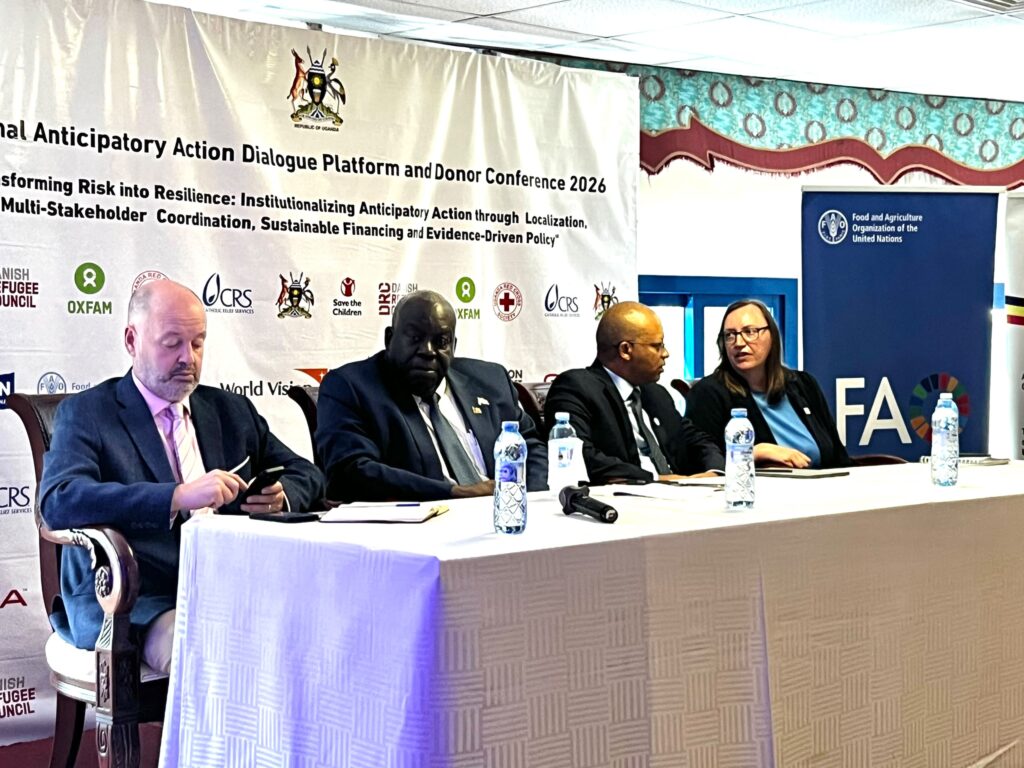
Uganda is pushing to move from reactive disaster response to acting before disasters strike, with the government calling for predictable financing, localisation, and stronger early warning systems to build national resilience.
This was during the National Anticipatory Action Dialogue Platform (NAADP) and Donor Conference 2026 held in Entebbe under the theme: “Transforming Risk into Resilience: Institutionalising Anticipatory Action through Localisation, Multi-Stakeholder Coordination, Sustainable Financing and Evidence-Driven Policy.”
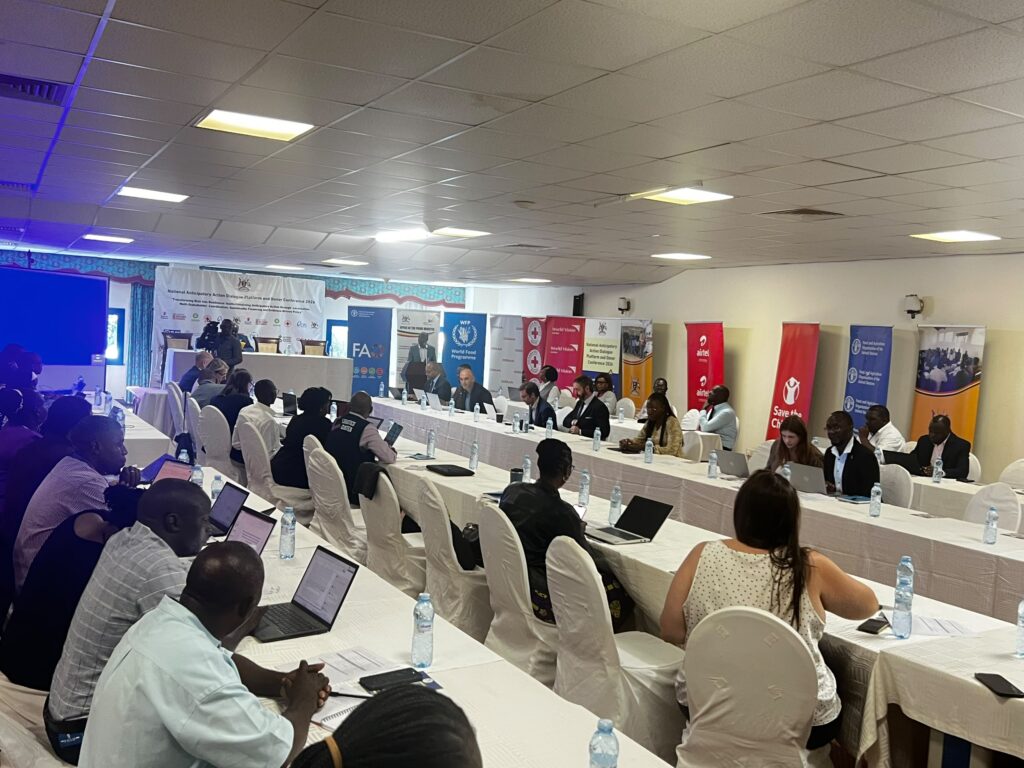
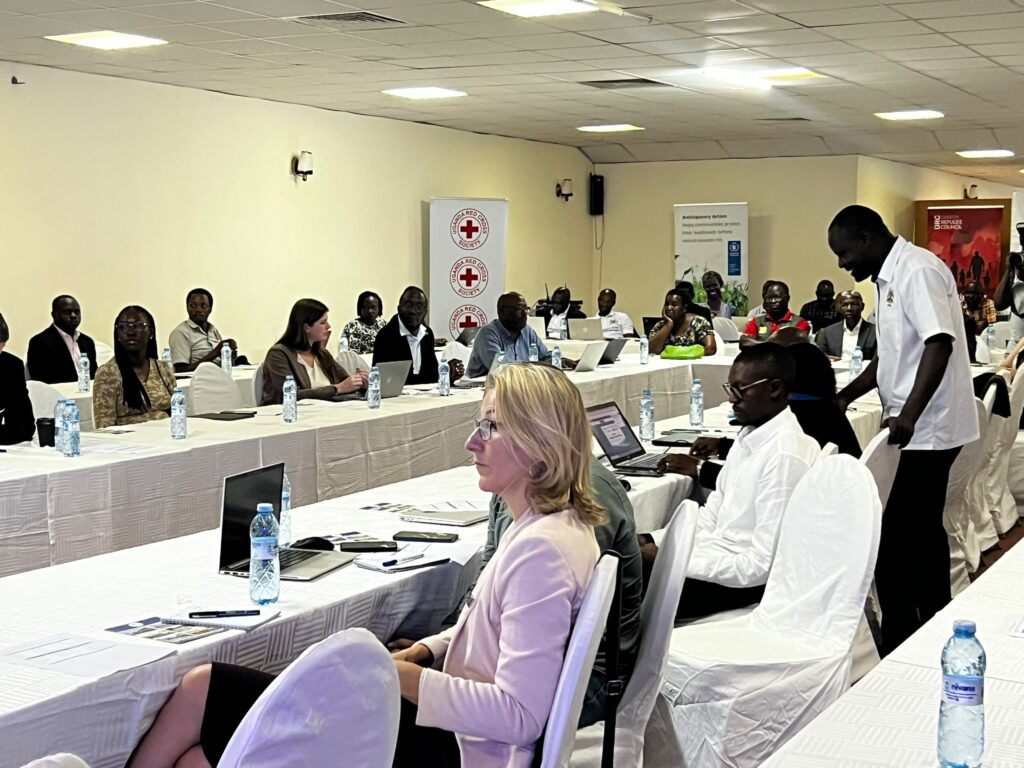
The dialogue brought together government, development partners, humanitarian agencies and local actors to align financing and commitments for Uganda’s Anticipatory Action Roadmap 2026-2031.
From Reaction to Action – Minister
The Minister for Relief, Disaster Preparedness and Refugees, Sam Engola, said Uganda faces increasing risks from floods, landslides, droughts, epidemics and food insecurity, making anticipatory action no longer optional.
“Uganda faces increasing risks from floods, landslides, droughts, epidemics, and food insecurity. We must therefore move from responding after a disaster occurs to acting before it does,” Engola said.
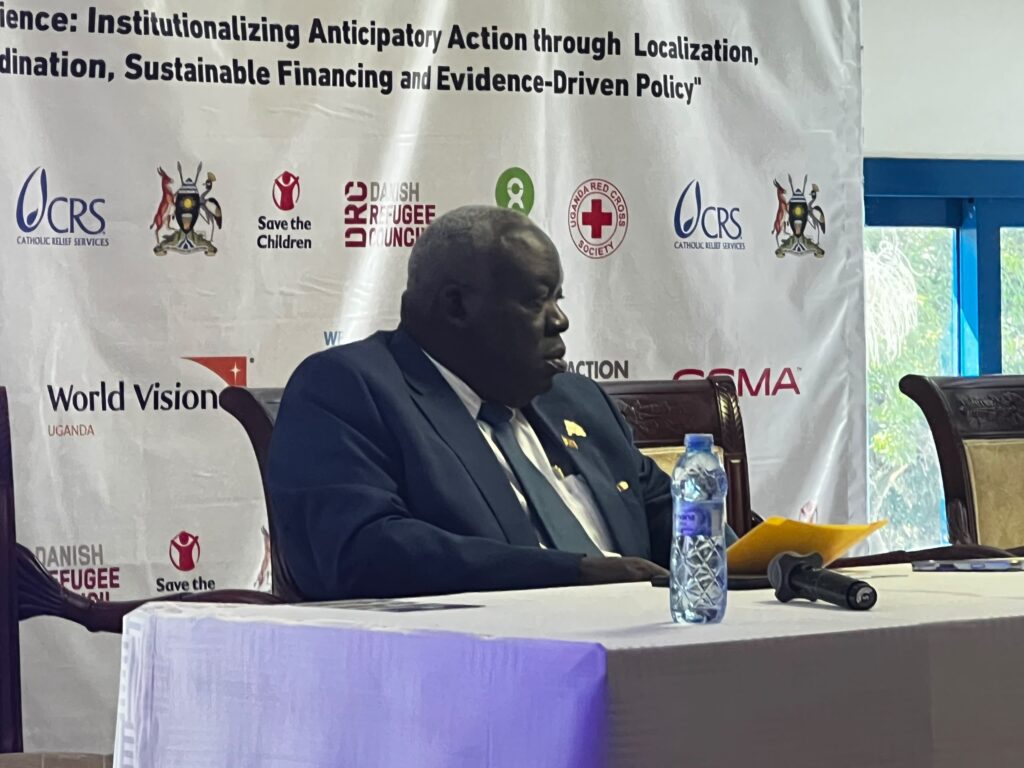
He said Uganda has made important progress, including the development of the Uganda Anticipatory Action Roadmap 2026-2031, a multi-hazard integrated early warning system, and the establishment of national and sub-national dialogue platforms.
“Our priority now is implementation – moving from pilots to scale. This requires strengthening partnerships and, most importantly, predictable and sustainable financing,” he said.
The Minister called upon development partners to support early warning and risk management systems, locally-led action, capacity strengthening and risk reduction.
“Localisation must be at the heart of this agenda. Communities and local governments must have the knowledge, capacity and resources to act. Today, Uganda is not only asking for support, but inviting you to join us in a long-term partnership for resilience,” he said.
“Let us move from warning to action, from anticipation to reaction, and from vulnerability to resilience.”
Climate Extremes On The Rise – Commissioner Ogwang
Dr Bob Alex Ogwang, the Commissioner for the Department of Meteorological Services within Uganda’s Ministry of Water and Environment, speaking on behalf of the Permanent Secretary, said monitoring shows extreme weather events are increasing in frequency and intensity.
“We have lost lives, property and infrastructure, and this kind of loss is repeated almost every time we have an extreme weather occurrence. We have seen temperatures rising across the country, with different regions varying in rates,” Bob Alex said.
He said the only way to minimise impacts is anticipatory action whenever early warning information is provided, aligning with the UN Secretary-General’s call that by 2027, every citizen on the planet should be protected by an early warning system.
He outlined the four pillars of an effective early warning system:
- Risk knowledge: Every citizen should be aware of risks associated with extreme weather and other disasters.
- Detection, monitoring and forecasting: Needs to be progressively strengthened to generate high-quality warnings.
- Communication and dissemination: Ensuring warnings reach every citizen on time to allow early action.
- Preparedness and response capability.
“Over the years we have focused more on the last mile – ensuring information reaches end users, which is good. But we tend to forget upstream where the information is generated. The quality of the forecast needs to be progressively improved,” he said.
Shs90.5 Billion Financing Gap – Assistant Commissioner Catherine
Presenting the financing outlook, Assistant Commissioner Catherine Ahimbisibwe said the total requirement to implement anticipatory action countrywide is Shs 207.6 billion.
Current project-based financing, which covers only some regions including Karamoja, Acholi, Lango, parts of Bugisu, Busoga and Teso, stands at Shs110.3 billion, leaving a gap of approximately Shs90.5 billion.
This means existing financing covers about 53% of the requirement, with 44% still to be mobilised.
The breakdown of the gap is as follows:-
- Digital payments and Integrated Disaster Information Management System: The largest gap at Shs48.7 billion. Required is Shs56.9 billion; available is Shs7.36 billion. This system is critical for damage and loss tracking, hazard data and last-mile payment for anticipatory action.
- Social Protection: Requires Shs121.19 billion for interventions targeting the elderly under SAGE and labour-intensive public works under NUSAF 4 for households most vulnerable to hazards. Available is Shs91.32 billion, leaving a gap of Shs29.87 billion.
- Early Warning and Risk Information: Requires Shs11.41 billion for climate information, hydrological monitoring, hazard assessments and mapping, and community sensitisation. Available is Shs 2.61 billion; the gap is Shs8.8 billion.
- Disaster Readiness, Preparedness and Mitigation: Including triggers and thresholds, requires Shs5.67 billion, with only Shs0.4 billion available, leaving a gap of Shs5.3 billion.
- Coordination: Requires Shs1.6 billion.
“Without a digital system for anticipatory action where we can inspect and take action through payments, then we shall have anticipatory action on paper, but it will not be implemented,” Ahimbisibwe said.
“If our country is most at risk due to hydrometeorological disasters and you find we have a funding gap of Shs8.8 billion in risk information, we need to focus on this as number one.”
The conference closed with a call for joint investment in national systems to ensure that when warnings are issued, institutions know what to do, communities know what is expected, and resources are available to act.