The Walimu Cooperative Union Limited has intensified efforts to recover Shs11 billion in outstanding loans from teachers’ primary cooperatives across the country, while rolling out a new digital system to ease loan access and repayment for teachers.
The Union is the umbrella body charged with managing the Shs25 billion fund by President Yoweri Kaguta Museveni for teachers’ welfare.
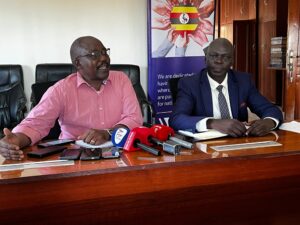
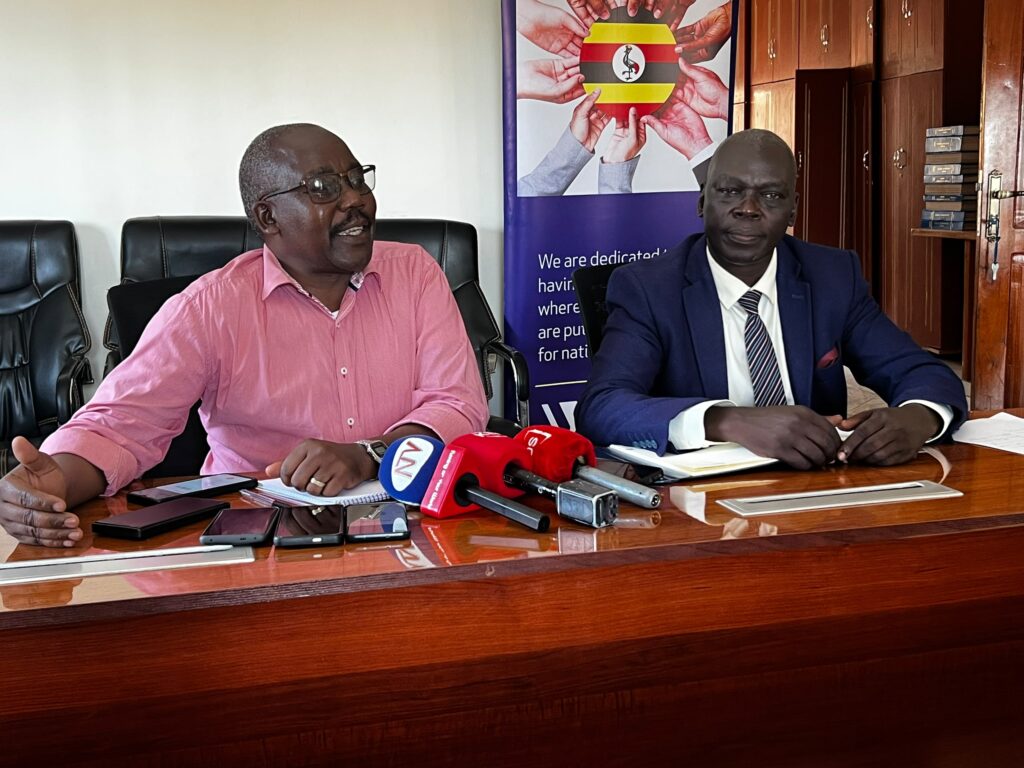
Speaking in Kampala, the Board Chairperson of Walimu Cooperative Union Limited, Steven Olinga, said the fund was created to rescue teachers from predatory lending by commercial financial institutions.
“You realise, far back, teachers were going to financial institutions and these financial institutions took advantage of my colleagues. You would find a teacher paying a loan of one million shillings for 16 months, and that one million would attract interest of over five million. That was very unfortunate,” Olinga said.
“We thank the Government of Uganda through the leadership of H.E. Yoweri Museveni for thinking about the teachers. When he pledged the 25 billion, he did not just pledge and stop there; he fulfilled and gave the teachers this money,” he added.
How the Fund Works
Olinga explained that Walimu is a secondary cooperative union with 275 member primary cooperatives formed by teachers in schools, town councils, municipalities, cities and districts across the country.
Walimu lends to the primary cooperatives at an interest rate of 8%, with a directive that primary cooperatives should not lend to individual teachers at a rate exceeding 15%.
“Our member is the primary cooperative. Teachers were asked to form cooperatives in different parts of the country, so the cooperatives apply for the loan from Walimu, Walimu gives these cooperatives money, and these cooperatives give the teachers the money at a very low interest rate,” he said.
Digital Disbursement and Recovery
Olinga admitted that the Union initially faced challenges in disbursement and recovery, which relied on manual processes and post-dated cheques.
“As a new board, we have innovated a digitalised system of disbursement and a digitalised recovery process. The teacher will not be running up and down. He can even use a small phone in the community to apply for the loan, get the money in class, at school, at ease,” he said.
He said the system uses payroll lending based on salary affordability, without requiring collateral. Loan recovery is done through check-off from the teachers’ salaries, with monitoring to ensure the money is put to productive use.
Walimu Is Not UNATU – Olinga
Olinga also sought to clarify the distinction between Walimu Cooperative Union and the Uganda National Teachers’ Union (UNATU), saying confusion over roles is fueling conflict.
“What is in common between the two organisations is that all our clients are teachers. That is all,” he said.
He explained that UNATU is a labour union regulated by the Ministry of Gender, Labour and Social Development, whose role is advocacy, including lobbying for salary enhancement and at times organising strikes.
Walimu, on the other hand, is a cooperative society regulated by the Ministry of Trade and Cooperatives, with oversight from the Ministry of Education and Sports and the Ministry of Finance, Planning and Economic Development. Its supreme organ is the Annual General Meeting (AGM).
“We do not account to UNATU. Our line of reporting is different. For us, we deal with the financial empowerment of teachers. As long as we stick to our roles, there should be no conflict. When they accuse us and bring information that is not true about Walimu, we only give clarity,” Olinga stressed.
Shs11 Billion Still With Members – Finance Manager
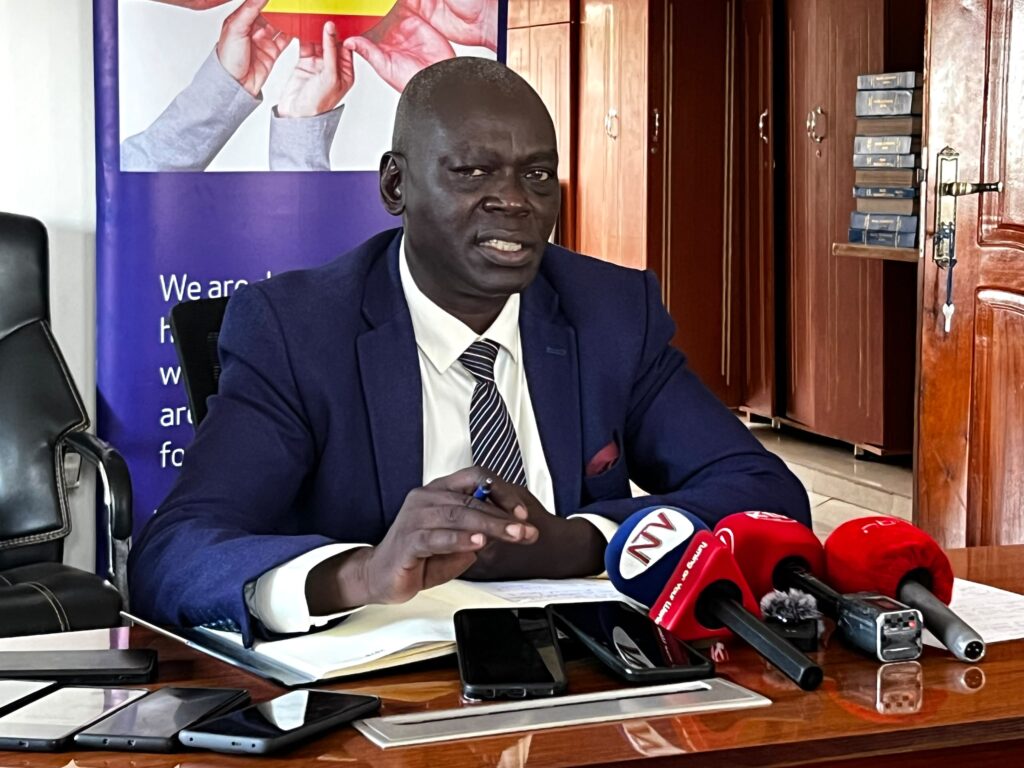
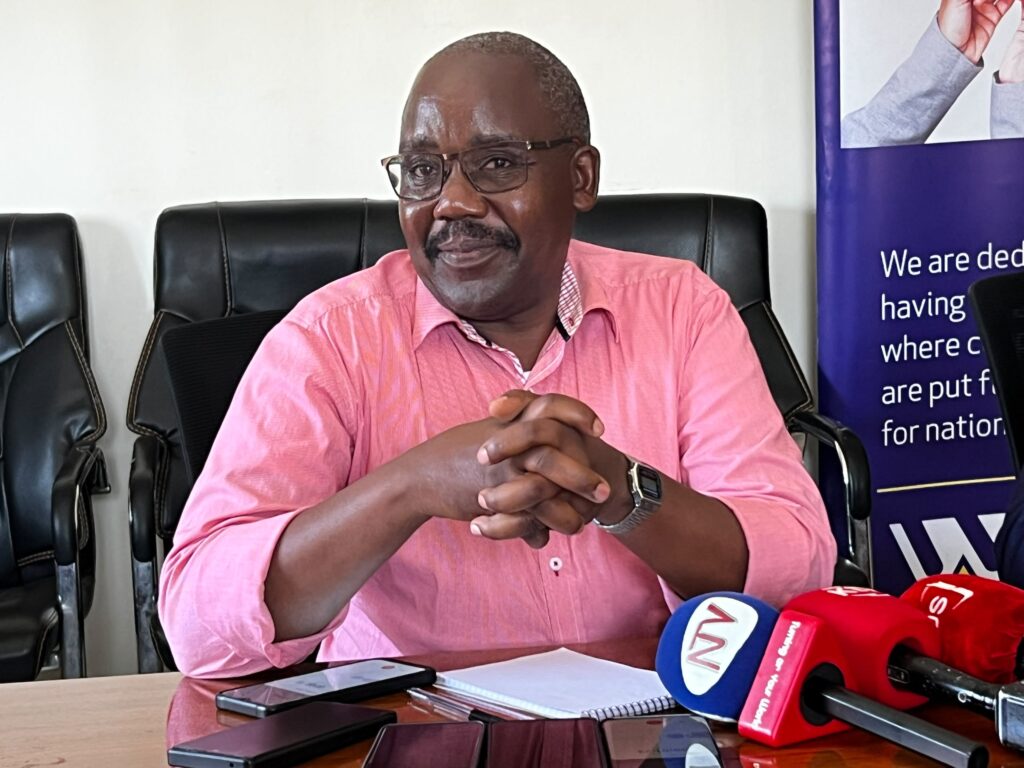
Speaking in the same engagement, Robert Omongin Odeke, the Finance Manager of Walimu Cooperative Union, said the notion that the Union mismanaged the funds is false, insisting the money is with the members.
“As we talk now, Shs11 billion is outstanding in bad debts. Who has this money? Teacher cooperatives have this money with them. The Registrar of Cooperative Societies, last June when they were inaugurating the new board, tasked the new board to recover this 11 billion,” Odeke said.
He said many of the defaulters are leaders of trade unions in their respective districts and regions.
According to Odeke, the Union has followed all dispute resolution mechanisms provided for under the Cooperative Act, Cap 107 – from management, to the board, to the AGM, to arbitration chaired by the Registrar of Cooperative Societies, and finally to courts of law.
“We went to courts of law to recover the money, and we recovered about Shs2 billion through the court system,” he revealed.
He, however, noted that the Union lost cases worth about Shs4 billion on technicalities after being challenged for lending without a licence from the Uganda Microfinance Regulatory Authority (UMRA) at the time. The Union has since appealed, with a recent ruling in Gulu stating that even if a lender had no licence, the borrower must still pay the principal.
Why Recovery Is Difficult
Odeke explained that the initial excitement led some cooperatives to borrow beyond their capacity. The introduction of salary coding exposed another challenge.
“The law says you cannot recover more than 49% from a teacher’s salary; you must leave them with 51%. Most of our members had already got loans from commercial banks, so we were left with a small portion to recover. You find a teacher has a loan of Shs80 million, but we are recovering Shs15,000 per month,” he said.
He said the new digital system has changed this dynamic. Once a teacher clears a commercial bank loan, the system alerts Walimu, and its code automatically attaches to recover its money.
“Immediately a loan from a bank finishes, it finds a Walimu reservation waiting in the system. That is why you find they make noise. But we are putting them in a corner, and we believe it will work out,” Odeke said.
He appealed to teachers to repay, stressing that the fund is revolving.
“This money is a revolving fund. The medicine for any debt is to pay, not to run away from debt,” he said.
The board said the outstanding debt as of May/June has since been reduced following the new recovery measures.