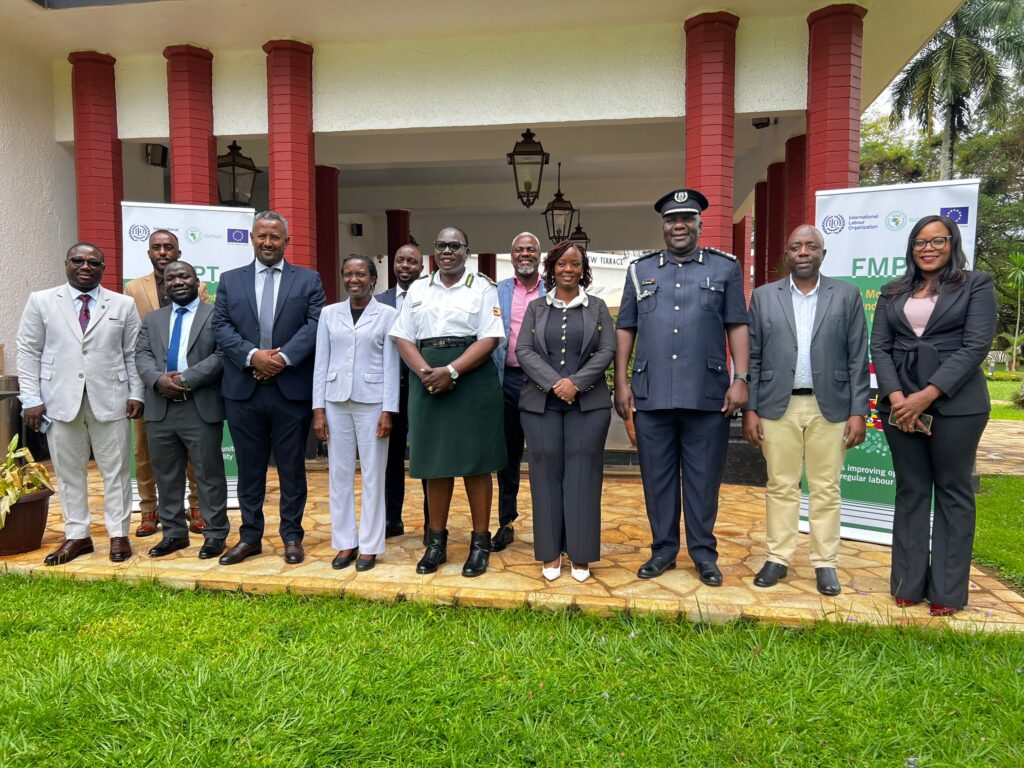
Uganda has commenced a five-day technical stakeholder workshop to update its Regulatory Impact Assessment (RIA) as a critical step towards ratifying the IGAD Protocol on Free Movement of Persons.
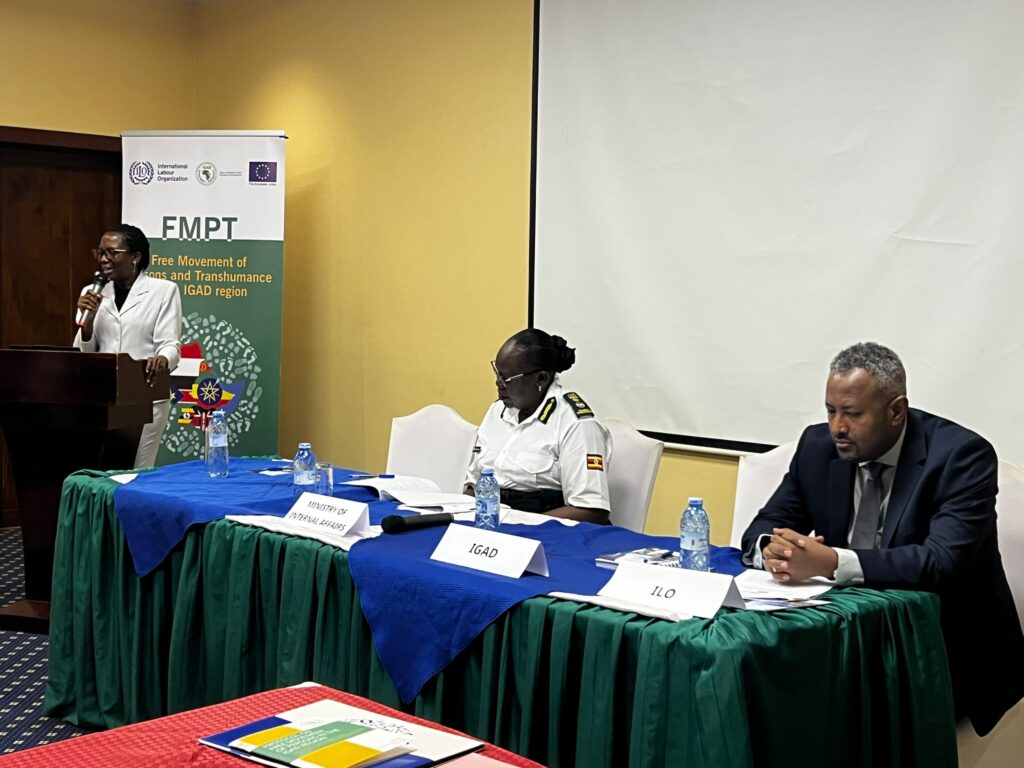
The workshop, being held from 12th to 16th October 2026 in Entebbe, is organized by the Ministry of Internal Affairs in collaboration with the IGAD Secretariat and the International Labour Organization (ILO) under the EU-funded Phase II Project on Support to Free Movement of Persons and Transhumance in the IGAD Region.
The workshop brings together 12 technical experts drawn from key Government Ministries, Departments and Agencies including the Ministry of Internal Affairs, Ministry of Foreign Affairs, Office of the President, Ministry of Works and Transport, Ministry of Justice and Constitutional Affairs, Ministry of East African Community Affairs, Ministry of Gender, Labour and Social Development, Office of the Prime Minister, and a resource person from Makerere University.
Building on July Roadmap
Uganda signed the IGAD Protocol on Free Movement of Persons on 14th May 2024. Following national consultations held in July 2026, Government and IGAD produced a draft Cabinet Memorandum and a roadmap towards ratification.
Officially opening the workshop, Dr Josephine Ekwang Ali, Commissioner Inspection and Compliance, National Citizenship and Immigration Control at the Ministry of Internal Affairs, said the workshop is a key milestone in implementing that roadmap.
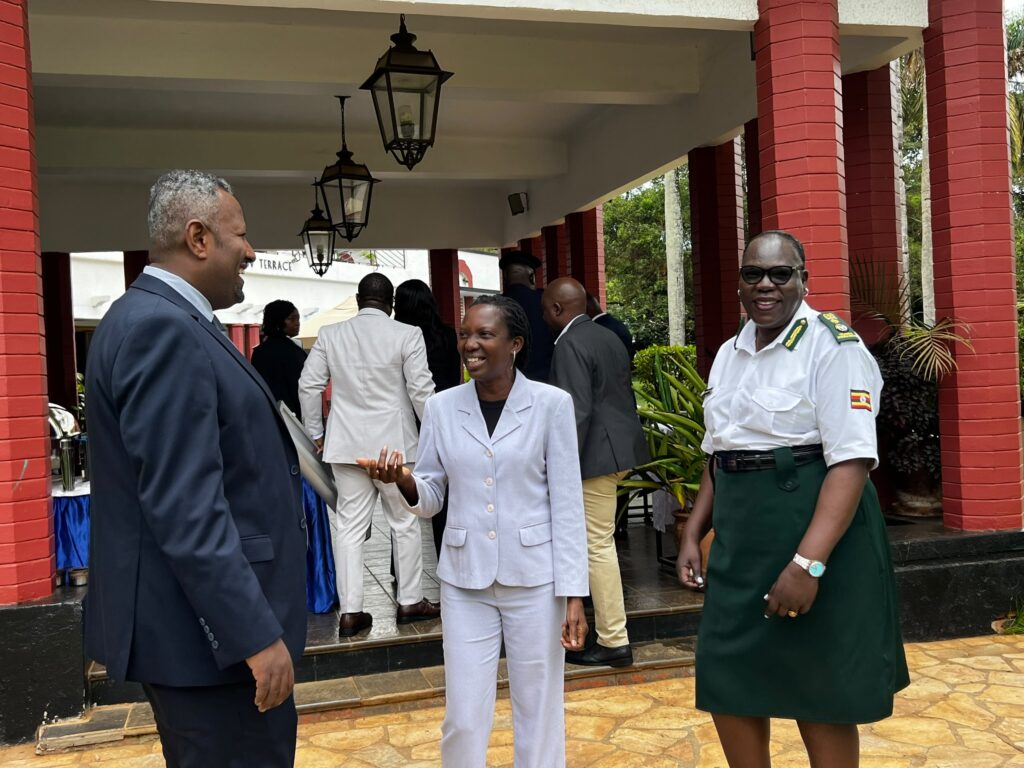
“For Uganda, regional mobility presents opportunities for employment, trade, investment, education and stronger relations with our neighbours. Our responsibility is to establish how these opportunities can be realised while safeguarding national security, protecting workers and vulnerable persons, and maintaining effective public services,” Dr Ekwang said.
She urged experts to be rigorous and practical over the next five days, examining the implications of the Protocol for Uganda’s laws, institutions, border operations and national budget, with particular focus on labour mobility, recognition of qualifications, social security, trafficking in persons, migration information systems and protection of vulnerable groups.
“Your recommendations must explain what needs to change, which institution should act, and how progress will be measured,” she added. “The assessment should give Government a credible basis for deciding on ratification and preparing for phased implementation.”
Translating Commitments into Action
Speaking on behalf of IGAD, Migration Expert Ms Agnes Igoye, noted that IGAD Member States have made significant progress since 2017 towards a free movement regime, facilitated by the EU and the ILO.
She recalled that at the 3rd IGAD Ministerial Conference on Labour, Employment and Labour Migration held in Nairobi in October 2025, Ministers committed to expedite ratification of the Protocol.
“Our task now is to translate these commitments into concrete national action,” Igoye said. “This workshop will enable us to review existing evidence, identify policy, legal, institutional and financial gaps, and clarify responsibilities and resources required for implementation.”
ILO Commends Uganda, Reaffirms Support
On behalf of Mr Kumba Ndaba, ILO Director for Djibouti, Ethiopia, Kenya, Somalia, South Sudan, Sudan and Representative to IGAD, AU and UNECA, Ephrem Getnet, Chief Technical Advisor for Free Movement of Persons and Transhumance in the IGAD Region, commended Uganda for its leadership and commitment to regional integration, effective migration governance and evidence-based policymaking.
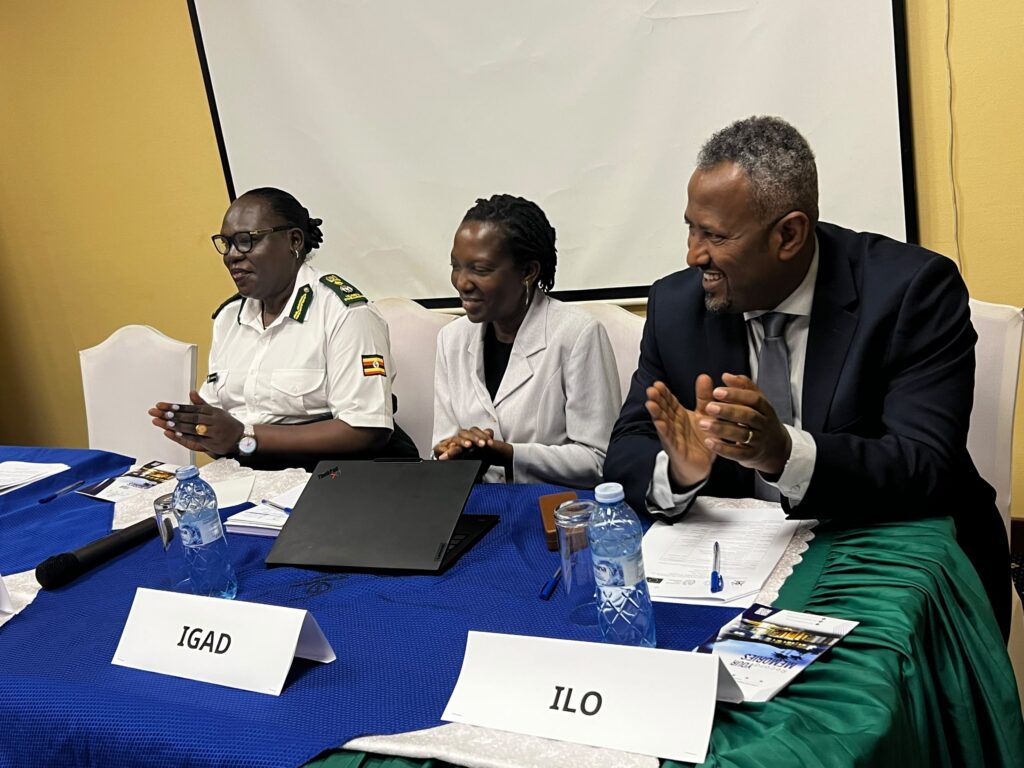
He thanked the team of experts who have worked behind the scenes to update the RIA, as well as the IGAD Secretariat for its long-standing partnership with the ILO and the European Union for its instrumental support to the free movement agenda through the Project on Free Movement of Persons and Transhumance.
“At regional level it is quite clear that IGAD Member States have demonstrated a strong commitment to advancing regional integration and strengthening migration governance through appropriate legal and policy frameworks, of which one is the Protocol on Free Movement of Persons and Transhumance,” Getnet said.
He said there is growing recognition of the Protocol’s contribution to economic development, trade, investment, entrepreneurship, productivity, social cohesion, human development and cooperation on border security, crime prevention and conflict mitigation.
“Free movement presents significant opportunities for citizens to access employment, business and livelihood opportunities across the region. It also enables enterprises to attract the skills and talents that they need, thereby enhancing productivity, competitiveness and economic growth,” he noted.
“Equally important, the Protocol provides a framework for promoting safe, orderly, regular and rights-based migration while strengthening protection of migrant workers, their families and fostering greater regional cooperation.”
Getnet said the workshop is timely and strategic as it will examine the policy, legal, institutional and financial implications of ratification and agree on preferred policy options based on benefits, costs, risks and mitigation measures.
“The outcome of this exercise will provide an important evidence base to inform subsequent decision-making and guide the next steps towards ratification and domestication,” he said.
“The Protocol has significant potential to promote safe, orderly and regular mobility, enhance regional economic integration and contribute to inclusive growth. Realizing its full benefits requires a strong governance framework, coherent policies, effective coordination, adequate resources, sustained capacity building and a whole-of-government and whole-of-society approach,” he added.
Reaffirming ILO’s commitment, Getnet said the organization stands ready to provide technical assistance, policy advice and capacity building support aligned to international labour standards and human rights principles.
He cited Uganda’s progress under the Djibouti Declaration on Labour, Employment and Labour Migration adopted by Ministers of Labour in 2021, including the adoption of the National Employment Policy 2021, the National Labour Productivity Policy, and the ongoing development of a comprehensive National Labour Migration Policy.
“I am confident that the discussions and recommendations emerging from this workshop will make a significant contribution to Uganda’s decision-making process and help advance our vision of greater regional integration, expanded economic opportunities and enhanced social development for all,” he concluded.
Expected Outputs
According to the concept note, the updated RIA will comprehensively assess the economic, social, security, legal and administrative impacts of ratification and domestication.
The expected outputs include a costed institutional roles and responsibilities matrix, a draft statement of financial implications, a consultation and validation report, and an agreed action matrix for final clearances and submission.
The updated RIA will be presented and validated during a broader national stakeholder consultation scheduled for 27th-28th October 2026, ahead of its submission to Cabinet.The IGAD Protocol, rooted in Articles 7 and 13 of the IGAD Agreement (1986), aligns with the African Union’s Agenda 2063, the AU 2018 Protocol on Free Movement, and the African Continental Free Trade Area (AfCFTA) aimed at deepening continental socio-economic integration.
IGAD reaffirmed its commitment to working with the Government of Uganda and partners to build a region where mobility is well-governed and contributes to peace, stability and shared prosperity.