LUWEMBA
The Government has pledged to fast-track approvals and directly support exporters to position Uganda for global markets, as it moves to operationalise the Entebbe International Airport Free Zone facility under a new push for export-led industrial growth.
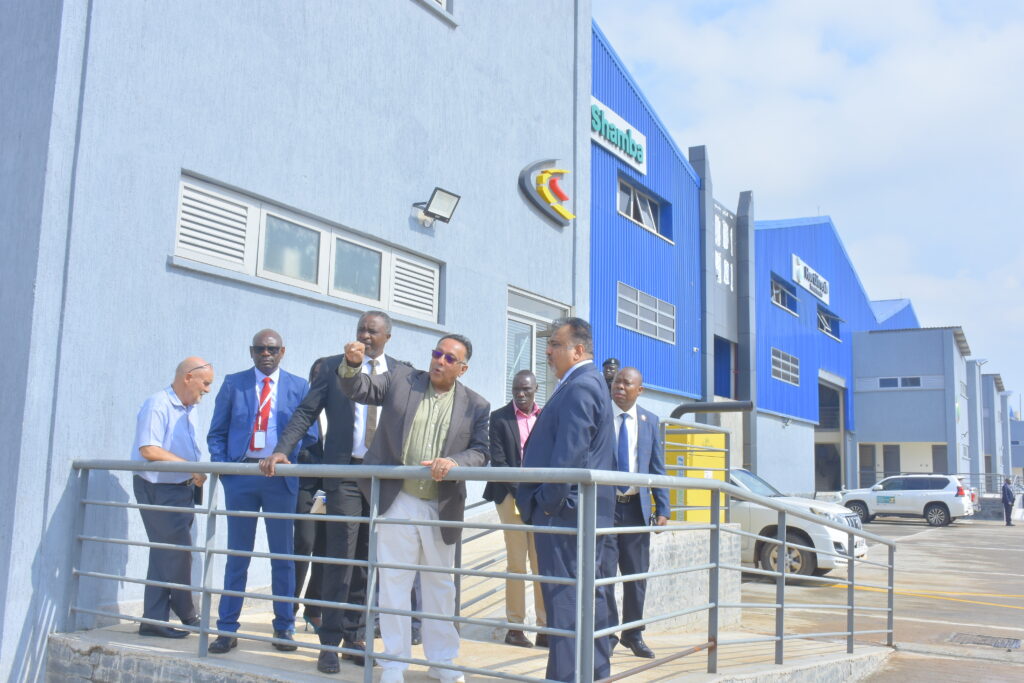
The commitment was made during the UFZEPA – UMA Business Forum held at the Entebbe International Airport Free Zone facility under the theme: “Driving Export-led industrial growth and competitive manufacturing through strategic collaboration, export development and the free zones scheme.”
“We are prepared to enter the Global market” – Minister Tanna
Hon. Sanjay Tanna, Minister of Trade, Industry and Cooperatives, said the forum signals the government’s readiness to support manufacturers and farmers to access international markets.
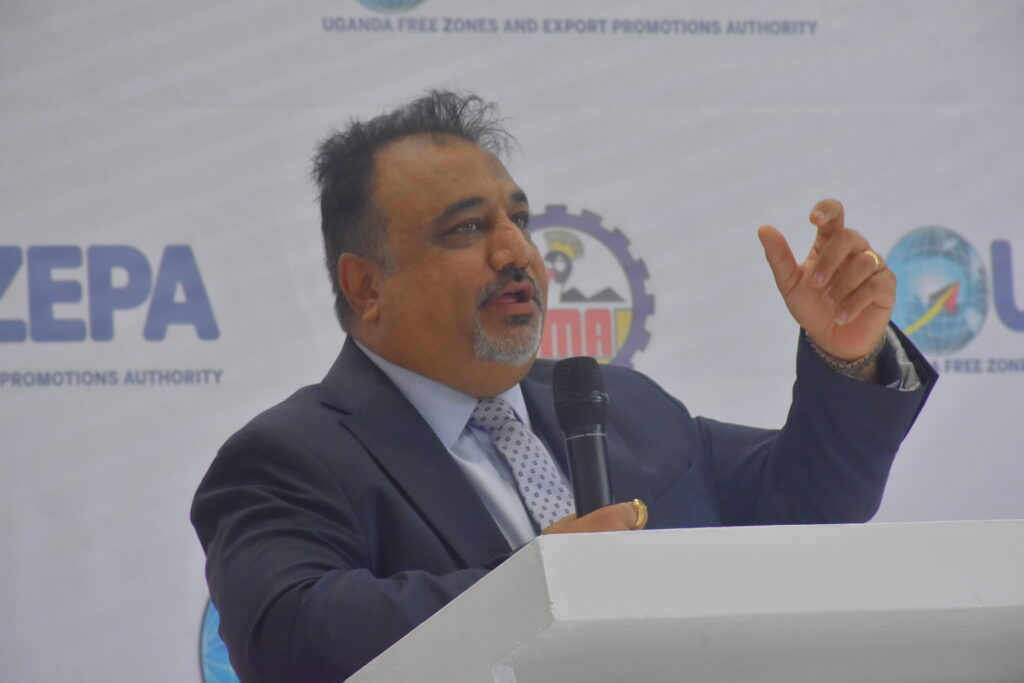
“This particular theme is saying that we are prepared to enter the Global market. I know that many of you are already in the global market, but this is a government-led initiative, and the government is hand-holding many of the groups to make sure that we hand-hold you to the market for the next few years,” Tanna said.
He noted that under NDP Four, agro-processing is one of four key pillars in government’s vision for a $500 billion economy by 2040.
“Uganda is predominantly agro-based. We have a blessed climate, extremely fertile soil, and the elasticity to produce. But time and again, we, the people in this room, have failed the people of Uganda,” he said.
Citing the collapse of vanilla and cocoa prices, the Minister said government will now only support “market-driven production” to protect farmers from middlemen.
“When you come to me, and you tell me I have a market for soya, then I go to the farmers and tell them, ‘Let’s plant soya.’ Not that we plant soya first, then the middlemen start chopping the farmers.”
Tanna described UFZEPA as the government’s arm for promoting free zones areas licensed to produce specifically for export markets.
“This facility is only the beginning. With that, we expect to develop our skill sets, provide employment, and increase our GDP. Uganda is very well positioned geographically. We have power, roads, security. We have ticked all the b,oxes and we believe that we are set to go to the next level.”
He also addressed investor concerns on delays. “As I was touring the sites, issues were raised about delays on our part as a ministry. Within one week’s time, we are going to make sure that all the paperwork that has been pending will be cleared. I am going to follow up with the Solicitor General and Attorney General to make sure that the document is delivered in the next few days,” he said.
“And I have also told them: the moment they get the letter, within two months I want to see this place operational. I want to see vegetables. I want to see fruits here.”
UMA: “We must stop Uganda products being re-branded abroad”
Dr Ezra Muhumuza, Executive Director of the Uganda Manufacturers Association [UMA], said the partnership between UMA and UFZEPA was intentional from the start.
“Four years ago, Honourable Minister, UMA and UFZEPA sat in a room and signed a memorandum of understanding to work together. Someone said, ‘But that is going to be the export of fruits and vegetables. What does it have to do with manufacturing?’ I want to say that we did this with intention,” Dr Muhumuza said.
He explained that UMA’s strategic agenda is to increase production and ensure farmers get maximum value.
“Our partnership in this strategic scheme is to make sure that we increase production in the country for whatever product, and then we take away the premium for export. Just the remaining quantities. Such that the net benefit of a farmer is 100%, because there has been a tendency that when people are exporting fruits they sort, no one has thought about what happens to what remains after the sorting. So we agreed that we mobilise the agro-processors to offtake what will not be for the export market.”
Dr Muhumuza said manufacturers understand the government’s frustration with Ugandan products being exported raw and re-packaged elsewhere.
“We sit as the private sector; we know what disturbs you at night. Currently, there is nothing that disturbs the minister like a product grown in Uganda, made in Uganda, has to cross to Kenya, has to cross to another country, and be packed as a product of that country, and those countries now benefit at the expense of the manufacturing country. That is one of the things on your agenda to ensure that we sort out.”
He pledged UMA’s support on traceability and branding.
“We want to support, and we pledge to support you in that agenda, because we all know that traceability increases sales. It sells the country. There is no advert you can do for a country better than the product that brings a smile to a consumer. Uganda has got unique products, and we want to leverage that through Geographical Indications so that even if they try to outcompete us, the uniqueness gives us an advantage.”
He added that the free zone will also help build “inferential benefits” for Ugandan products.
“When you send a truck of avocados, and it makes a good sale, and tomorrow you come and say, ‘But I have pineapples as well from Uganda.’ No, no, no, bring. Because there is an inferential benefit that comes from the other product. This zone could be helping us on export of light materials, but for us, we are looking at a long-term benefit in terms of marketing our products and branding the country of origin as a good origin.”

Exporters: “We are at risk of losing 2 million euros”
Samuel Balagadde, Chairman of Hortifresh Association Uganda Limited said the Nteve facility was acquired with support from President Museveni to promote exports of fresh fruits and vegetables.
“Uganda has the potential, but we are doing so badly. One of the issues hindering our development is that we don’t have certifiable pack houses in Uganda,” Balagadde said.
“We wanted to use this opportunity to set up a state-of-the-art facility which is certified by the EU, so that we can increase our exports.”
He revealed that the EU, through the SBS project implemented by CABI, has set aside 2 million euros for equipment, a training centre, cold chain trucks, and satellite packhouses.
“But all of that is at a standstill because the tenancy agreement is not there. We are at risk of losing it because the project has timelines. Procurement was stalled because the tenancy agreement is not there.”
Balagadde welcomed the Minister’s directive for an interim letter.
“We are very glad that His Excellency gave us this facility. And now we see light at the end of the tunnel that we should be able to operationalise it within the next few months. The EU expected us to have this facility operational by the end of October.”
UFZEPA: “Where is the pipe blocked?”
Hez Kimoomi Alinda, Executive Director of UFZEPA, said the forum was convened to diagnose challenges and align government with the private sector.
“The question that we need to keep asking is: where is the pipe blocked? Because everything should be moving seamlessly, so that this country moves from where we are now to the next level,” Alinda said.
“That next level is the tenfold growth strategy looking at agro-industrialisation, tourism, mineral beneficiation, and science, technology and innovation, including support to service exports.”
He stressed the need for urgency in service delivery.
“If we don’t approach issues with a sense of urgency, then we will not solve them in time. And if we don’t solve them in time, then money is getting lost. The private sector is not able to achieve its ambitions if any part of this moving machine is moving slowly.”
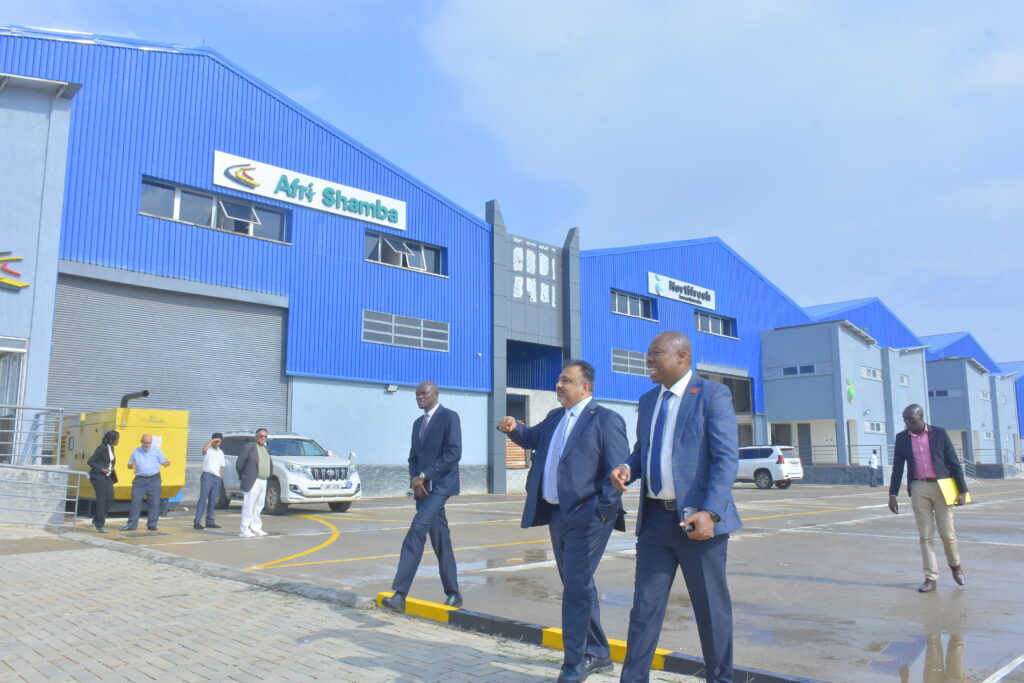
On the Entebbe facility, Alinda said: “This facility is quite large. We have seven production units, each with an average of 1,063 square meters. The projections we have are exports of up to $113 million US dollars within about two or three years, going to the market, both regional and international, through the airport.”
The forum ended with government, manufacturers and exporters committing to closer collaboration to unlock bottlenecks, add value locally, create jobs, and drive Uganda’s export competitiveness through the free zones scheme.