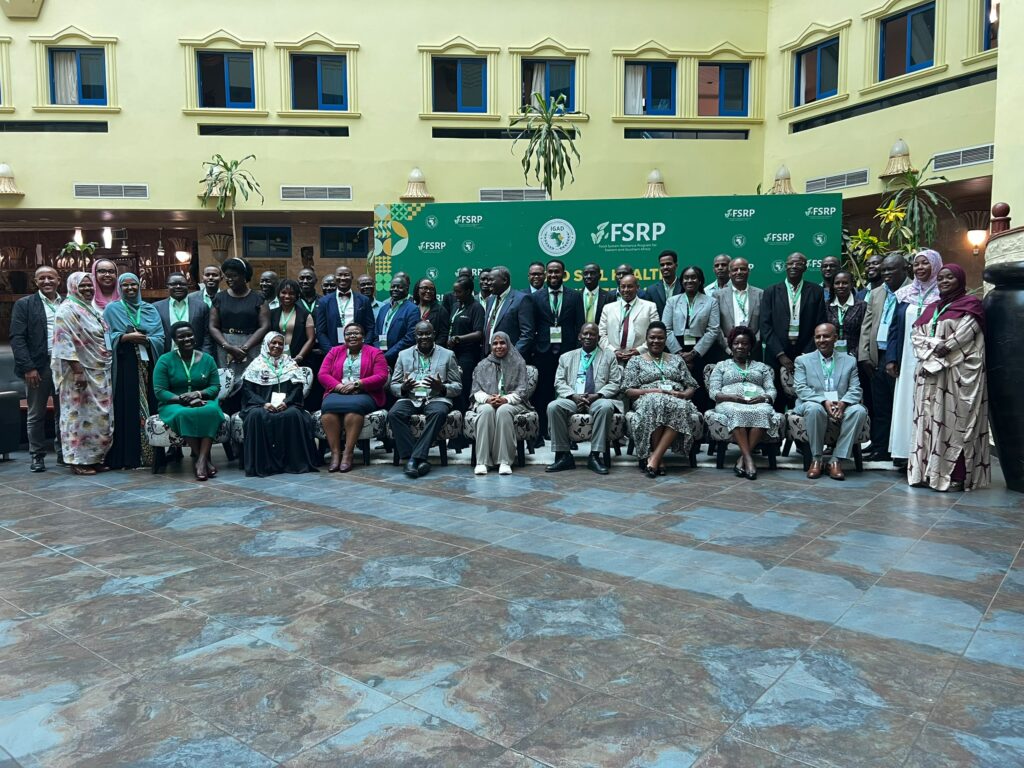
Stakeholders from across the Intergovernmental Authority on Development (IGAD) region are meeting in Entebbe for a four-day learning event on soil health and fertiliser use, in a bid to address declining productivity and rising food insecurity.
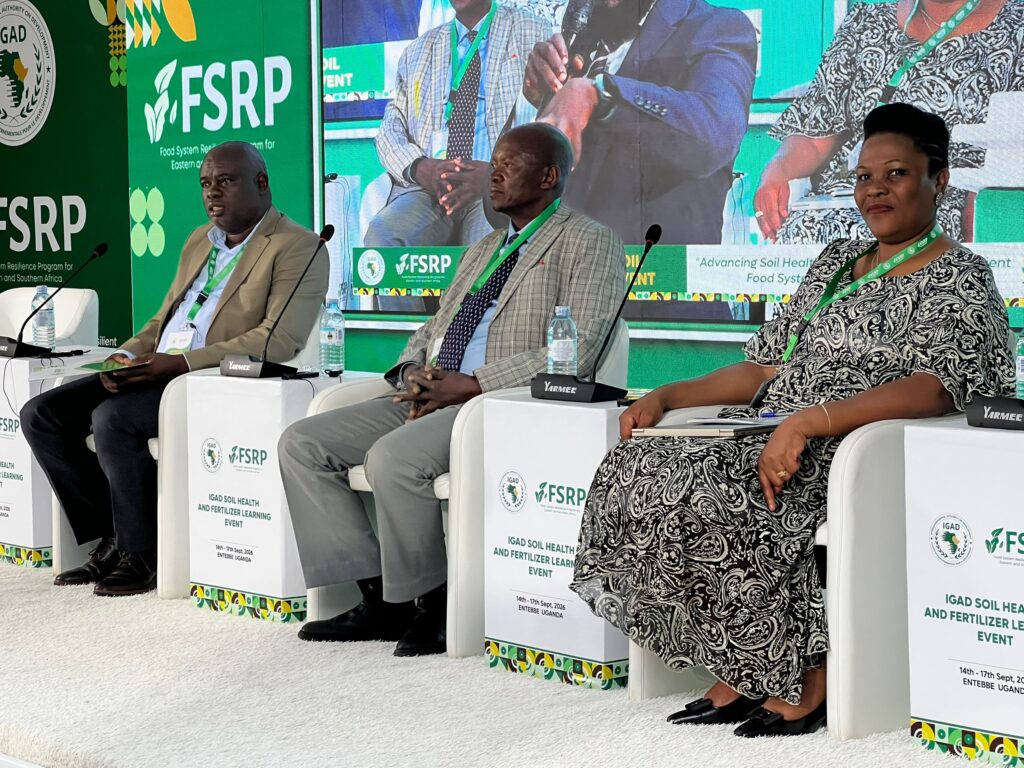
The IGAD Soil Health and Fertiliser Learning Event, being held from 14th to 17th September at Entebbe, Uganda, is running under the theme “Advancing soil health and fertiliser use for resilient food systems in the IGAD region.”
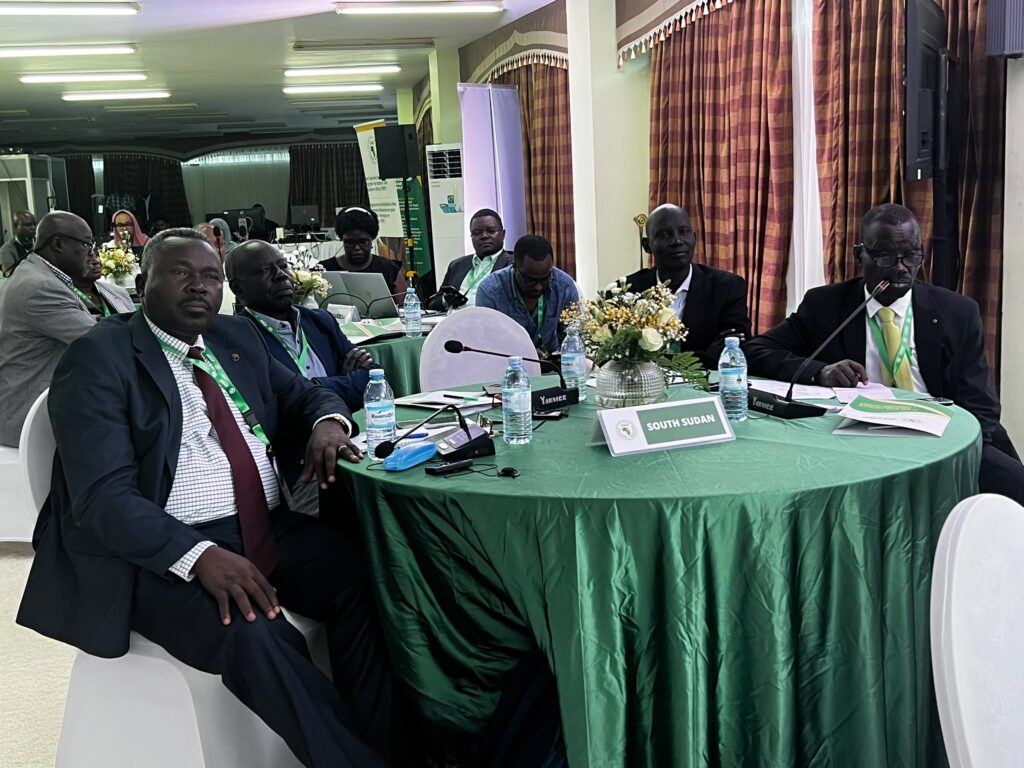
The event is organised under the IGAD Fertilizer and Soil Health Hub, established under the Food Systems Resilience Program (FSRP), and has brought together technical experts from IGAD Member States, West Africa, the private sector, research institutions and development partners. At least 60 participants are attending, with a practical learning visit planned to the National Agricultural Research Laboratories in Kawanda.
Uganda Commits to Action
Opening the event on behalf of the Permanent Secretary of the Ministry of Agriculture, Animal Industry and Fisheries (MAAIF), Assistant Commissioner for Food and Nutrition Security Alex Bambona said soil health is central to Uganda’s food systems transformation agenda.
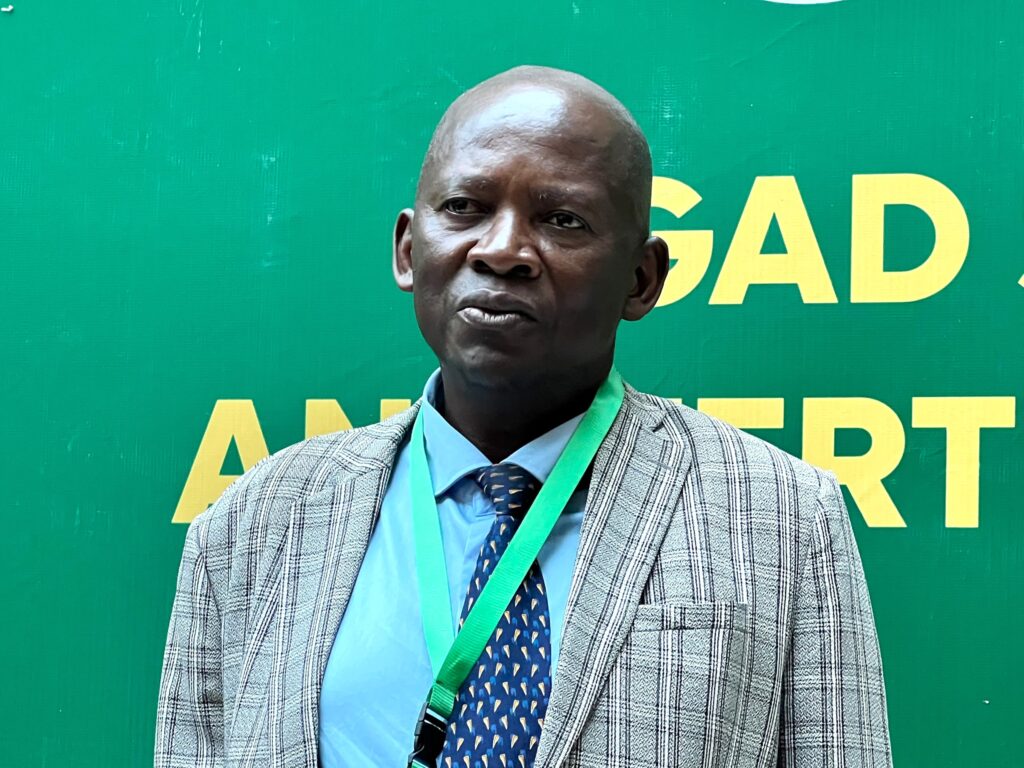
“Looking at the subject at hand, there is no doubt that this discussion fits very well in our broad priorities to ensure rapid transformation of the country’s food systems,” Bambona said.
“This gathering is a significant step forward in our collective journey towards enhancing agricultural productivity, food security and overall food systems transformation on our continent.”
He said Uganda remains committed to translating high-level commitments like the Nairobi Declaration on Fertilizer and Soil Health into action for farmers, and is working with partners including the International Fertilizer Development Centre (IFDC).
Bambona noted that the IGAD region, despite its vast natural resources, has one of the highest levels of food insecurity in Africa and among the lowest fertiliser use in the world.
“The starting point for food system transformation is basically the harnessing of soil resources, conservation of our soil health, and the use of fertilizer,” he said.
He warned that poor agrarian practices and low modernisation have accelerated soil degradation, and that fertiliser alone is not a solution if misused.
“Even fertilizer per se is not a solution. It can be misused in the treatment of the soils if it is not used well.”
On climate change, Bambona described a two-way relationship: degradation releases greenhouse gases while climate change-driven droughts and floods worsen degradation, especially in pastoral and peasant farming systems.
Hub to Drive Regional Action
Speaking on behalf of the IGAD Executive Secretary, Daher Elmi, Director of Agriculture and Environment Division at IGAD, said healthy soils are the foundation of resilient food systems.
“Across our region, soil degradation, declining soil fertility and low fertilizer use efficiency continue to undermine agricultural productivity, food security and livelihoods. These challenges are further compounded by climate change, recurrent droughts and growing pressures on natural resources,” Elmi said.
He said IGAD is advancing the IGAD Fertilizer and Soil Health Hub as a regional platform for knowledge sharing, innovation exchange, policy dialogue, partnership development and resource mobilisation.
“The Hub is intended to bring together governments, research and academic institutions, private sector actors, farmers’ organisations and financial institutions to collectively accelerate action and investment in soil health,” he said.
Elmi thanked the Government of Uganda for hosting and the World Bank for support through the FSRP.
He said the event features a Soil Health Marketplace where institutions will showcase innovations in soil testing, digital advisory services, fertiliser solutions and climate-smart agriculture, as well as thematic discussions on integrated soil fertility management and regional policy frameworks.
Delivery Gap Hurting Africa
Dr Ermias Betemariam, speaking on behalf of technical partners, said Africa’s biggest challenge is not lack of technical solutions but failure to deliver them to farmers and policymakers.
“What we lack most in Africa is not like a technical deficit, but sometimes we have a deficit of delivery, how to take it to the decision makers,” he said.
He said the Hub will help bridge the gap between research institutions like Makerere University and ministries, and help transform pilot projects into large-scale change.
“We have tremendous natural resource capital. Soil health is a fantastic development infrastructure. For me it’s beyond food and nutrition security. It’s about job creation. It’s about overall development, economy,” he said.
Dr Betemariam noted Africa spends $60 to $80 billion annually on food imports despite huge potential to increase yields.
“If you consider Uganda, for example, it has tremendous potential to increase its production per unit area, instead of expanding its farms. Africa will remain a net food importer, which is a bit of a shame.”
He cautioned that prevention of degradation is cheaper than restoration.“Once soils are degraded, it is very difficult to claim back. So the biggest message is let’s try to avoid degradation first of all.”
Why The Hub Was Formed
Denis Kibuuka from the IGAD Secretariat said the Hub was established following the 2024 AU Summit on Africa Fertilizer and Soil Health in Nairobi, which directed Regional Economic Communities to establish regional hubs.
“The purpose of this learning event is to bring together technical experts from the region to discuss issues related to soil and fertilizers, and be able to understand what is happening,” Kibuuka said.

He noted that each IGAD Member State will share its experience on fertiliser use and soil health status, while technical partners including ISDA, ICRAF, CABI and ASARECA will exhibit innovations.
According to Kibuuka, the Hub has three core objectives: to serve as a platform for sharing experiences, to support capacity building for Member States, and to establish a regional soil information system for collecting and analysing soil data.
He said soil infertility remains a severe threat. “There is no other option apart from using fertilizers to improve on the soil because when you are talking about soil health, it is like human health. You have to keep supporting the soils.”