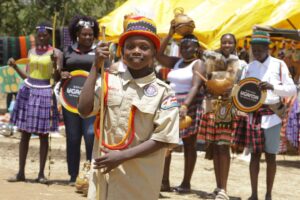

The 11th edition of the Karamoja Cultural Event (KCE) is underway at Natakwae Sports Complex, Katanga Town Council in Moroto District, drawing thousands of pastoral communities from across Uganda, Kenya, South Sudan and Ethiopia.
Founded in 2014 by the Karamoja Cultural Association, the annual festival rotates among the nine districts of Karamoja. Moroto is hosting for the second time in its 12-year history, with attendance growing from less than 1,000 in the early years to over 5,000 this year.
This year’s theme is “Unity in Culture, Strength in Peace, Prosperity Through Tourism and Natural Resources.”
Mavitu Ichumar, the Lead Guide for the Karamoja Cultural Event, said the festival is more than dance and music, it’s a living museum.

“This is where you get a front-row seat to the cultural expeditions. Different dance groups are adorned in beads, traditionally. You have different clusters of pastoral communities: the Toposa, the Nyangatom, the Maasai, the Turkana. These are all the Ateker pastoral communities,” Ichumar said.
For first-time visitors, he said the highlight is immersion. Four groups toured 40km to the site where the Karimojong are believed to have first settled after migrating from the Ethiopian Highlands, a place with rich history for the Ateker people.
The tours include traditional manyattas, hikes on the slopes of Mt. Moroto, and visits to local factories making marble and melons. The tours will run throughout the week.
“We are championing respect for culture. Please dress in a very respectful manner. Don’t dress in a way that provokes the culture. And when you take photos, don’t show suffering or nudity. Share the good story of Karamoja,” he cautioned, urging tour operators, travel agents and content creators to promote positive tourism.
More Than Dancing
James Jemo Muya, the publicity of the event, explained the deeper purpose, saying, “This event is not just about drinking, dancing and singing. It is about ensuring pastoral communities come together, unite and have a common understanding of how they can develop.”
In addition he noted that the festival brings together the Ateker cluster internationally, the Toposa from South Sudan, Turkana from Kenya, Nyangatom from Ethiopia, and in Uganda the Karamajong of nine districts, the Iteso, and Lango.
Muya said the economic impact is already visible. Hotels in Moroto are fully booked, with turnover higher than usual, while local women and youth are exhibiting traditional artefacts, beads, food and crafts.
On Day Two, the program features traditional games, dances, campfire sessions and cultural competitions.
Day Three will be the official opening by H.E. the President of Uganda.Day Four is reserved for dialogues: elders’ dialogue, women’s dialogue, youth dialogue and a Children’s Parliament sponsored by UNICEF.
Muya said this year the youth dialogues have been split to avoid intimidation.
“The Karachunas from the villages who have not gone to school feel intimidated when mixed with educated youth. This time we have separate sessions so they can speak freely and find solutions.”

UTB: Karamoja is a Tourism Giant in the Making
David Emuku, Team Leader for Uganda Tourism Board (UTB) at the event, said UTB’s role is visibility and promotion.
“As the national promoter of tourism, it’s our mandate to support all tourism activities. We help create content so Ugandans and the international community know what Karamoja has,” Emuku said.
He noted growth at both micro and macro levels, from individual bead-makers selling asuka, necklaces and bangles to new lodges and accommodation facilities opening up.
Emuku said the festival has become a platform for peace dialogue, mindset change from a warrior culture to harmonious living, and curbing rural-urban migration of youth to Kampala.
“Karamoja leads by far with fashion ornaments. This unique dress code is something the country is embracing, and tourists are loving, both domestic and international,” he said.
This morning, organisers also unveiled a wildlife conservation initiative centred on the giraffe, found in Kidepo National Park and Pian Upe. The giraffe, with its long neck standing high above all, was chosen as a symbol of Karamoja’s vision to stand out as a tourism giant.
The 11th edition continues until the end of the week, with tours, exhibitions and dialogues still open to the public. Organisers advise visitors to register with official guides at the central organising committee and use approved tour vehicles.