
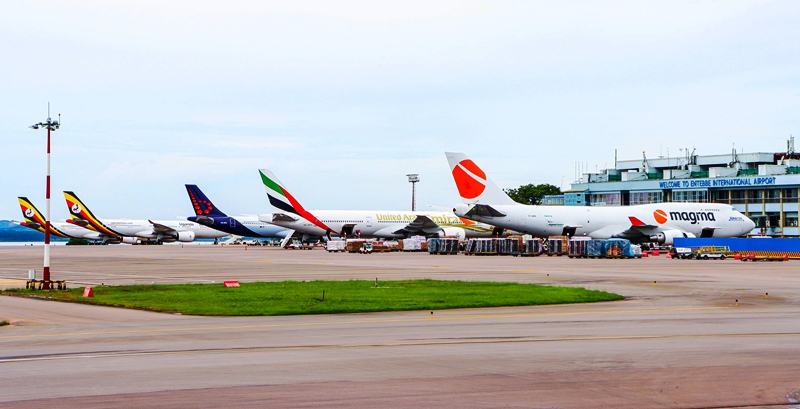
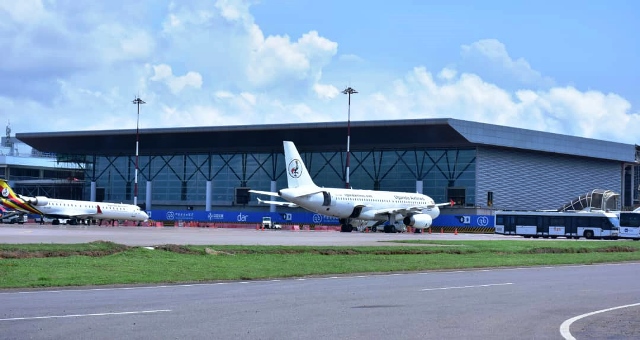
Parking apron at Entebbe airport
Uganda secured a seat on the International Civil Aviation Organisation (ICAO) council following elections at the ICAO 42nd Session in Montreal- Canada in early October. The assembly, composed of 192 member states, elected Uganda to the council for the term 2025–2028 after a competitive process in which Uganda garnered 155 votes out of 185 cast.
The ICAO council is the highest decision-making body of the United Nations (UN) specialised agency, responsible for setting standards and recommended practices that govern the global aviation industry.
The country was elected to the ICAO council due to its strong aviation growth, modernisation efforts (like Entebbe Airport), commitment to international standards (safety, security, environment), and strong African bloc support, reflecting global confidence in its growing role, strategic focus on green aviation, and ability to champion African interests in global aviation policy for safety, sustainability and connectivity.

With a mandate of promoting the safe, secure, regular and efficient use plus development of civil aviation as well as regulating air transport in Uganda, UCAA also underwent a universal security audit programme- a continuous monitoring approach which saw the aviation regulator score 81.6%, way above the regional average of 64.5% and the global average of 72.36%. The audit is a mandatory evaluation process by ICAO aimed at assessing the effectiveness of a given country’s security systems in compliance with the standards and recommended practices.
The results indicated an overall aviation improvement in the security performance of Uganda. Gen. Edward Katumba Wamala, the minister for works and transport lauded Uganda’s entire aviation industry for the high score in the universal security audit programme. “Such results provide a strong foundation for international airlines operating in and out of Entebbe airport,” Katumba remarked.
Infrastructure modification
The minister further observed that failing such an international audit would have had significant repercussions for the country’s reputation and security. He appealed to UCAA and all aviation industry stakeholders to strive and ensure consistent excellence in facilitating seamless travel through Entebbe airport.
To this end, Fred Bamwesigye, the UCAA director general noted that the aviation authority continues to oversee the expansion and modification of Entebbe airport to offer a seamless and good experience for all the passengers and stakeholders.
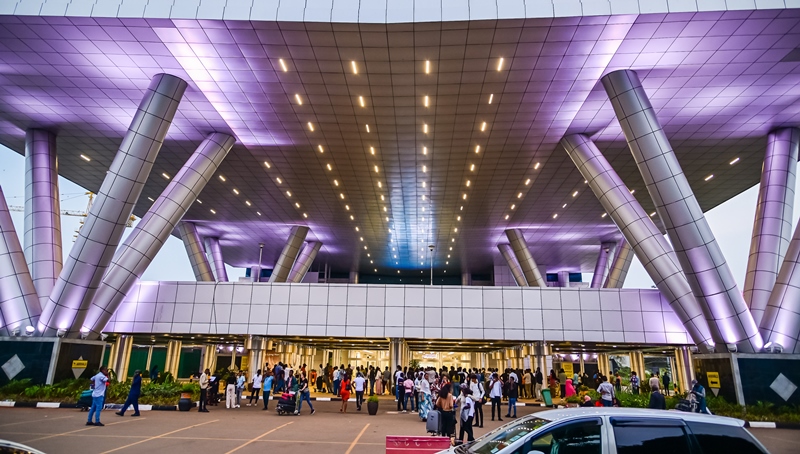
The modified terminal building which was opened in 2024, continues to provide arriving and departing passengers with a more spacious and comfortable environment. In July 2025, a modified Karibuni lounge also at Entebbe airport was unveiled. It boasts an array of amenities, including increased seating capacity and a 360 degree view of the runways at the airport. “Karibuni lounge is more than just a waiting area.
The amenities and additional features include baby-changing rooms, infant playrooms, a designated smoking area, three supplementary massage chairs, high-speed Wi-Fi, a conference room, prayer room among others,” Vianney Luggya the UCAA spokesperson stated.
There’s also a new 20,000 square metre terminal building at Entebbe airport which has come with three more aero-bridges, bringing them to a total of five. It has 24 more check-in counters, in addition to the current 22. There are also 14 self-check-in counters in the new terminal building.
Advanced Fuel Facilities
The aviation authority signed an agreement with Tristar Energy Limited, a division of the UAE-based Tristar group, for operating a newly constructed fuel storage facility and fuel hydrant pipeline system at Entebbe Airport.
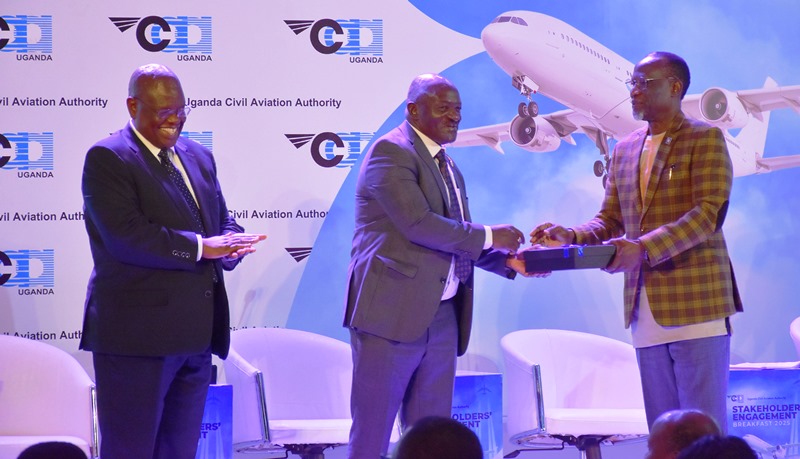
The agreement-signing ceremony was presided over by the UCAA boss Fred Bamwesigye together with the group Chief Executive of Tristar, Eugene Mayne. Tristar Energy Limited has already constructed 12 million litres of fuel storage tanks and laid an underground fuel pipeline.
The facility provides additional fuel storage at the airport, enhances safety, and facilitates quicker aircraft turnaround. Once fully completed, the fuel farm will boast a 22 million-litre storage capacity and a 7-kilometre fuel hydrant pipeline with 43 hydrant pits covering the entire airport.
The storage facility and fuel hydrant pipeline have been constructed to meet the latest industry standards, including a leak detection system and a 24/7 control and monitoring system.
Sustainable Aviation Fuels
Meanwhile, Uganda’s aviation sector is fast-tracking the use of sustainable aviation fuel (SAF) as required by ICAO. Uganda’s combination of biomass availability, waste management needs and strategic infrastructure, provides a strong foundation for development of SAF. This is contained in a feasibility study report conducted with support from the United Kingdom’s department for transport.

“With quantified technical potential exceeding 300-850 million liters per year, certified pathways and airport readiness, Uganda is positioned to progress from feasibility to first generation production,” the report revealed. Cesar Verlarde on behalf of the ICAO director of the Air transport bureau noted that Uganda has the potential and capacity to produce SAF mainly based on the use of waste.
According to the study, Uganda generates significant quantities of sugarcane, maize, cassava among other agricultural residues, while its rapidly growing urban centres produce an increasing volume of municipal solid waste. Olive Lumonya, the UCAA deputy director general assured that Uganda will proceed to the next phase of the business plan geared towards producing SAF.
“The mandates for using SAF blends are already being implemented in Europe and other regions of the world. Even our national carrier- the Uganda Airlines operating in the UK is required to uplift SAF-blended fuel on its return route from London.
At UCAA, we believe that fast-tracking the production and deployment of our own SAF will not only reduce costs for our national carriers but also contribute to environmental sustainability and create economic opportunities for the business community,” Lumonya remarked.
In June 2022, ICAO launched a programme geared towards assistance, capacity building and training for SAF in order to aid developing states in their transition to cleaner energy for aviation; collectively targeting net-zero carbon emissions by the year 2050 as a contribution to global climate action.
Passenger and Cargo Traffic
Entebbe international Airport registered 105,320 arriving and 111,420 departing passengers in January 2025, a total of 216,740 international passengers, which is an average of 6,991 passengers per day. The passenger traffic in January 2025 was partly attributed to several factors, including tourism, Uganda’s hosting of various international conferences, such as the African Union Extraordinarywhich attracted 977 delegates, Uganda Airlines’ sustained operations on new routes, and the coming on board of new air operators (Kush Air and Premier Airlines, with flights to Juba since December 2024).

In relation to cargo, the airport recorded 3,491 metric tonnes of exports and 1,578 metric tonnes of imports, a total of 5,069 metric tonnes in January 2025.
February 2025 recorded a total of 161,095 international passengers. In March, the Airport recorded 83,661 arriving and 94,722 departing passengers, a total of 178,383 international passengers, an average of 5,754 passengers per day.
The March 2025 growth is partly attributed to the coming on board of new air operators like Flynas, which commenced direct flights between Riyadh and Entebbe in January 2025 among others. In relation to cargo, Entebbe airport recorded 1,965 metric tons of imports and 3,887 metric tons of exports, a total of 5,852 metric tons of cargo.
In April 2025, the airport facilitated 93,194 arrivals and 92,272 departures, a total of 185,466 international passengers, which is an average of 6,182 passengers per day. In relation to cargo, imports were 2,088 metric tons, and exports were 4,010 metric tons, a total of 6,098 metric tons in April 2025.
In June 2025, Entebbe Airport registered 213,217 international passengers, including 106,583 arrivals and 106,634 departures. This was an average of 7,107 arrivals and departures per day. Earlier in May 2025, the airport recorded 97,568 arriving passengers and 100,484 passengers, a total of 198,052.In terms of cargo, Entebbe airport recorded a total of 6,293 metric tonnes, comprising 4,332 metric tonnes of exports and 1,961 metric tonnes of imports.
During the first half of 2025, Entebbe airport recorded 550,439 international arrivals and 582,927 international departures, totaling 1,133,366 international passengers.
Furthermore, the airport handled 230,577 passengers in July 2025. This included 119,127 arriving and 111,450 departing passengers, averaging 7,437 per day. The surge in July 2025 was partly driven by the arrival of delegations for CHAN. In terms of cargo, the airport handled a total of 5,863 metric tonnes, including 3,961 tonnes of exports and 1,902 tonnes of imports.
In August, Entebbe airport facilitated 116,507 arrivals and 126,582 departures, a total of 243,089 international passengers, which is an average of 7,841 arrivals and departures per day. Sports tourism, and conferences contributed to the higher figures, among others.
In relation to cargo, imports were 2,010 metric tones and exports were 3,247 metric tones, a total of 5,257 metric tones in which fresh produce were part of the leading exports.
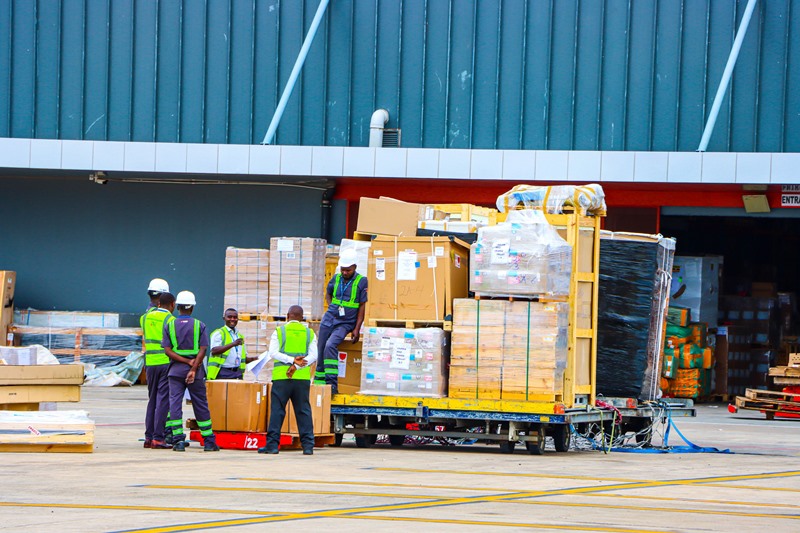
The Airport recorded 226,301 international passengers in September 2025, comprising 105,043 arrivals and 121,258 departures, an average of 7,543 arriving and departing passengers per day. While there was a slight dip from August’s record-breaking 243,089 passengers, overall traffic remained strong, reflecting consistent travel demand driven by business, tourism, and conference activities.
On the cargo front, imports stood at 2,175 metric tonnes, while exports were 3,707 metric tonnes, a total of 5,882 metric tonnes, which is an increase from August’s 5,257 metric tonnes.
Air service agreements
In November this year, Uganda and Argentina concluded a Bilateral Air Services Agreement (BASA) and also signed the reviewed BASA with Qatar. The Memorandum of Understanding was signed and the Argentina BASA initialled during the ICAO Air Services negotiation meeting that took place in Punta Cana, Dominican Republic.
This milestone marked another step forward in expanding Uganda’s international aviation partnerships and creating opportunities for increased air connectivity, trade, and tourism between Africa and South America.
Air Navigation services
The air-navigation services at Entebbe airport have transitioned from reliance on only terrestrial navigation facilities (located on the ground) to using satellite based navigation systems in all phases of flights. While the terrestrial facilities are still important, new technology emphasises using satellite-based systems to improve the safety, efficiency and capacity of airspace.
Upcountry Airfield improvements
Vianney Luggya, the UCAA public affairs manager noted that the aviation body completed resurfacing of the Kisoro aerodrome runway, taxiway and apron among other enhancements to facilitate tourism. “The medium term plan is to construct a new terminal building at Kisoro as well as upgrading the runway from its current length of 1,200 metres to 1,800 metres. We have also installed a portable airfield ground lighting system at Soroti airport to aid night training for the aviation academy,” Luggya noted.
Plans are also underway to construct a taxiway link at Soroti airfield as well as installing security screening at Arua airport. According to the UCAA spokesperson, there is ongoing paving of two taxi-ways links from the runway to the apron and construction of a car park with a capacity of 100 cars to serve the new terminal building at Arua airport.
“We are also constructing an airside-landside separation fence at Soroti airport in addition to carrying out major re-graveling works to restore the deteriorating runway and apron surfaces at Pakuba and Moroto,” Luggya explained.
Under the public private partnership, there are ongoing construction works of Kidepo international airport as well as the upgrade of Gulu international airport in preparation for AFCON 2027. The construction of the first phase of Kabalega international airport is at 94%, and expected to be operationalised in 2026. Early this year, president Museveni commissioned works at Jinja airfield which include, improving the runway, taxiway and apron. Once completed, the tarmacked runway will be 30 metres wide by 1,710 metres long. The bigger apron will accommodate 6 aircraft.
Uganda Airlines
Uganda is currently served by 18 international scheduled operators. The Uganda Airlines now operates 25 flights daily and contributes 12% of transfer traffic, making it the largest operator in and out of Entebbe airport, according to Shakila Rahim Lamar the head of corporate affairs and public relations. The national carrier operates 18 destinations across Africa and beyond.
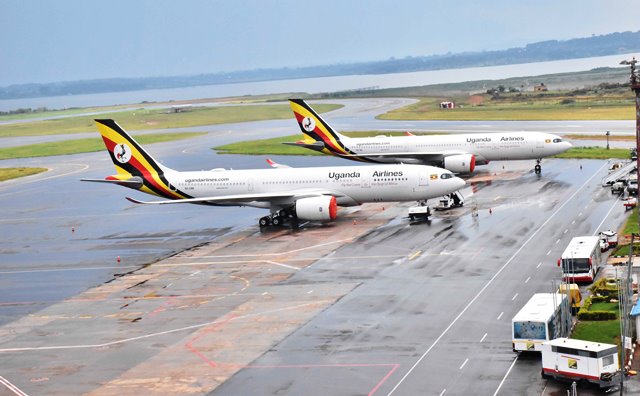
These include, Entebbe, Dubai, Nairobi, Mumbai, Lagos, Bujumbura, Kilimanjaro, Johannesburg, Darlesalaam, Lusaka, Harare, Juba, Mombasa, Kinshasa, Zanziba, Mogadishu, Abuja and London. The national carrier also runs an interline with Air India in Mumbai and Airlink in South Africa. As the company pushes to acquire more aircraft, the expansion plan targets Jedha, Riyadh, Capetown and Accra.